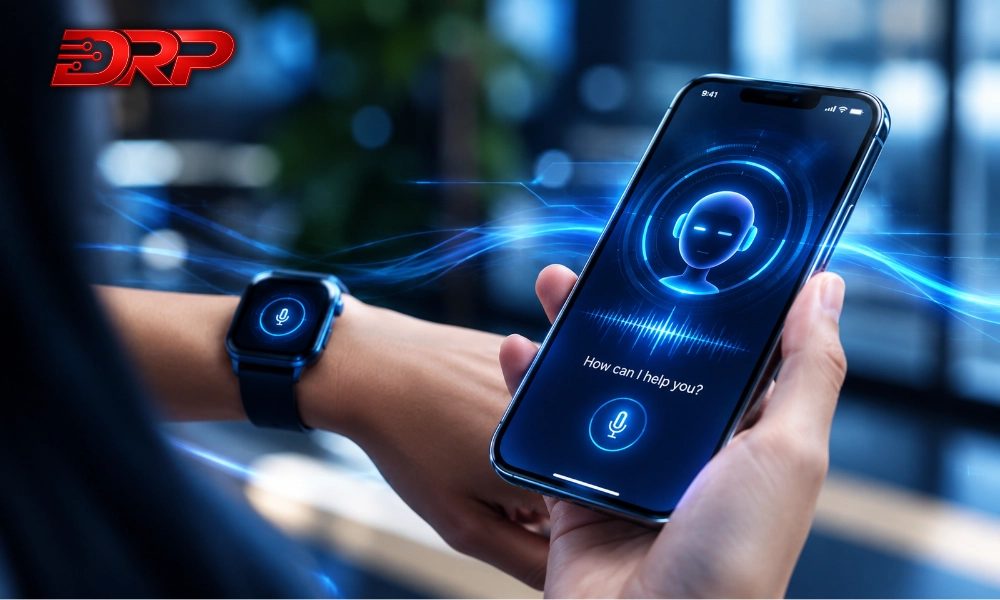
Business phone systems evolved significantly in recent years. Cloud-based VoIP has already changed how organization make and receive calls, allowing employees to communicate from desk phones, computers, and mobile devices while giving businesses greater flexibility and control.
The next development is conversational artificial intelligence.
Intermedia’s new AI Receptionist introduces AI directly into the inbound calling experience. Rather than relying exclusively on traditional menus and predefined prompts, AI Receptionist allows callers to explain what they need naturally. It can answer common questions using business-specific information, identify caller intent, route calls to the appropriate destination, and provide context when a conversation needs to be transferred to an employee.
For Long Island businesses already using or considering cloud-based communications, AI Receptionist introduces a new capability: the phone system can now participate in the initial customer interaction. Instead of simply connecting a call, it can help determine why someone is calling, provide appropriate information, and decide when an employee needs to become involved.
That makes AI Receptionist less about replacing the traditional phone system and more about expanding what a modern VoIP platform can do.
What is an AI Receptionist?
An AI Receptionist is a conversational AI solution designed to serve as an initial point of contact for inbound business calls.
Traditional automated phone systems generally depend on predefined options. Callers listen to a menu and select the department or service they believe is appropriate. While this approach remains useful, it requires the caller to understand how the business has organized its phone system.
AI Receptionist takes a more conversational approach.
A caller can explain what they need in natural language. The AI can interpret that request, provide an appropriate answer then the information is available, or transfer the caller to a configured person or team when additional assistance is necessary.
This makes AI Receptionist particularly relevant for businesses that receive a high volume of routing inquiries, experience frequent call transfers, or need additional coverage during busy and after-hours periods.
How AI Receptionist Changes Inbound Call Management
Inbound calls can create competing priorities for employees.
A receptionist may need to answer the phone while assisting someone in the office. A customer service representative may have to interrupt another conversation to respond to a routing question. An employee working on a time-sensitive project may need to stop and direct a caller to another department.
These interactions may only take a few minutes, but repeated interruptions can create a substantial workload.
AI Receptionist is designed to address this challenge by handling routine inbound interactions, answering common questions, identifying caller intent, and directing calls to the appropriate destination.
The objective is not to eliminate human interaction. Instead, it is to help businesses determine which calls require an employee and which can be handled more efficiently through conversational AI.
That distinction is important for businesses considering how AI can practically improve their communications.
AI Receptionist Can Answer Common Business Question
Frequently asked questions are one of the clearest applications for AI Receptionists.
Businesses routinely receive calls regarding:
- Business hours
- Locations
- Services
- Policies
- Pricing
- Warranty or service information
- General business information
AI Receptionist can provide answers using FAQs and business-specific Knowledge Collections. Businesses can control the information available to the system and begin with clearly defined, repeatable questions.
This creates an opportunity to reduce the number of routine questions that require employee involvement.
For example, instead of an employee repeatedly answering a question about business hours, AI Receptionist an provide that information directly. If the caller has more complicated request, the call can then be directed to an employee.
This approach allows automation to handle straightforward interactions while preserving human involvement where it adds the most value.
Conversational AI Improves Call Routing and Transfers
Call routing has always been an important component of business phone system. The challenge is making sure callers reach the right destination efficiently.
Traditional IVR systems typically ask callers to select from predetermined choices. AI Receptionist can instead use natural language to understand what the caller is trying to accomplish.
The Intermedia AI Receptionist solution can identify caller intent and transfer the caller to an appropriate configured person, team, or destination.
This can reduce unnecessary transfers and make the calling experience easier to navigate.
Consider a business with separate sales, service, billing, and administrative departments. A caller may not know which department handles a particular request. With a conversational experience, the caller can describe the issue rather than determining the correct department independently.
The technology can then use the configured routing scenarios to direct the interaction appropriately.
AI-Generated Call Context Creates Better Employee Handoffs
Routing a call to the right employee is only part of the process.
The quality of the handoff also matters.
When callers are transferred between departments, they may have to repeat their name, explain the reason for their call, and provide information they have already shared. That can make the customer experience inefficient.
AI Receptionist can provide an AI-generated recap when transferring a caller, giving the receiving employee context about the preceding conversation. This can help employees begin the conversation with a better understanding of the caller’s needs.
For businesses, that creates a more connected experience between AI-assisted interactions and human customer service. The AI handles the initial conversation, but the employee receives the information necessary to continue it more effectively.
After-Hours, Overflow, and High-Volume Call Coverage
Business communication does not always fit neatly into a nine-to-five schedule. Customers may call after normal business hours, during seasonal peaks, or at times when employees are already helping other customers or managing other responsibilities.
AI Receptionist can support after-hours and overflow call flows by providing immediate assistance when employees are unavailable. It can answer configured questions, provide general business information, identify what the caller needs, and route the call according to the business’ established process.
This can also help during periods of unusually high call volume. Instead of every inbound call requiring immediate employee involvement, routing or transactional requests can be handled through conversational AI while employees remain available for calls that require more specialized assistance.
This can be particularly valuable for organizations where a large percentage of inbound calls involve routine or transactional requests, or where missed calls, long hold times, and abandoned calls become more common during busy periods.
Rather than increasing staffing solely to handle temporary spikes in call volume, businesses can use AI Receptionist to provide another layer or support while maintaining access to employees when human assistance is needed.
AI Receptionist Can Reduce Repetitive Work for Employees
Routine phone calls can consume a surprising amount of employee time, particularly when staff members repeatedly answer the same questions, provide basic information, or redirect callers to another person or department.
AI Receptionist can handle appropriate routine interactions so employees can focus more of their time on conversations that require their experience or judgment.
For example, Intermedia illustrated the potential impact using a business receiving 500 inbound calls per month, with average call length of 3.5 minutes and 50% of calls considered routine or transactional. Under those assumptions, AI-assisted call handling could represent approximately 14.6 hours of potential time savings per month. Actual results will vary based on a business’ call volume and how the technology is configured.
The more useful question for an individual business is how much employee time is currently spent handling repetitive calls. Reviewing call volume, common inquiries, and frequent transfers can help identify where conversational AI may provide the greatest operational benefit.
AI Receptionist Works Alongside Existing VoIP Communications
Adding an AI Receptionist does not necessarily require a business to replace its existing communications environment. Conversational AI can become another capability within a modern cloud-based phone system, allowing businesses to introduce automated call assistance where it provides the most value.
Businesses can configure the information the AI Receptionist uses, establish how different types of callers should be handled, and determine when a conversation should be transferred to an employee or department.
A business might begin by using AI Receptionist on its primary inbound number. Another organization may focus on after-hours calls, while a high-volume department could use it to handle common questions before transferring more complex requests to staff.
Starting with a specific use case can make adoption easier to manage and give the business a clearer way to evaluate whether the technology is improving its call handling.
Where AI Receptionist Can Provide the Most Value
AI Receptionist does not need to handle every inbound interaction to provide value. The best opportunities are often fond where a business already has a clearly identifiable communication problem.
AI-assisted call handling may be worth considering when a business experiences:
- High inbound call volume
- Frequent repetitive questions
- Frequent transfers or misrouted calls
- Missed or abandoned calls
- After-hours inquiries
- Employees who are regularly interrupted to answer or redirect calls
The goal should be to identify a specific problem first and then determine whether conversational AI can improve that part of the call experience.
A business may decide to use AI Receptionist as the first point of contact, provide additional coverage during busy periods, support after-hours callers, or assist a particular department with repetitive inquiries. A focused implementation can make it easier to measure whether the technology is providing meaningful value.
What AI Receptionist Means for Long Island Businesses
For businesses throughout Nassau and Suffolk counties, AI Receptionist provides another option for managing inbound communication without requiring every routine call to begin with an employee.
Organizations with busy front desks, multiple departments, after-hours inquiries, or fluctuating call volume may be able to use conversational AI to handle appropriate interactions while maintaining access to employees when human assistance is needed.
For businesses already evaluating VoIP solutions, AI capabilities are becoming another consideration alongside reliability, mobility, call routing, integrations, and ongoing support. The important question is not whether a phone system includes AI, but whether those capabilities solve a real communication problem for the business.
Could an AI Receptionist Fit Your Business?
AI Receptionist will not be necessary for every call or every organization. Its value is greatest when a business can identify specific communication problems it wants to solve, such as repetitive business inquiries, missed calls, frequent transfers, after-hours demand, or employees spending too much directing routine calls.
For businesses already considering a modern VoIP system, AI capabilities are becoming another part of that evaluation. The question is not simply whether artificial intelligence is available, but whether it can make a measurable improvement in the way customers and employees communicate.
DRP Solutions helps Long Island businesses evaluate and implement VoIP solutions built around their communication needs. Through its partnership with Intermedia, DRP can also help organizations determine where newer capabilities such as AI Receptionist may fit into their existing or future phone environment.
If your current phone system creates unnecessary work, missed calls, or inefficient call routing, talk with DRP Solutions about the communication options available for your business.
FAQs
Yes. An AI Receptionist can handle multiple inbound conversations at the same time, helping reduce hold times during busy periods.
This can be especially useful for businesses that experience seasonal spikes, predictable busy hours, or sudden increases in call volume. Instead of every caller waiting for the same employee to become available, routine interactions can be handled concurrently while calls that require human assistance can still be routed to the appropriate person or department.
Yes. Depending on how it’s configured, an AI Receptionist can help guide callers toward appointment scheduling or send them to the appropriate booking process.
For businesses that receive frequent appointment-related calls, this can reduce the number of routine scheduling questions employees need to handle. The system can provide relevant information, direct callers to a scheduling resource, or transfer the call when a more complex request requires employee involvement.
Yes. An AI Receptionist can help route callers to a specific employee, team, or department when the system is configured to recognize those destinations.
This creates a more natural calling experience for customers who already know whom they need to reach. Instead of navigating through several menu options, the caller can explain who they want to speak with, and the system can use that information to direct the call appropriately.
No. Businesses generally do not need to build or train their own AI model to use a commercial AI receptionist solution.
The businesses typically provides the information the system needs, such as frequently asked questions, business details, routing rules, departments, and transfer destinations. The focus is on configuring the AI around the organization’s real communication needs rather than developing an artificial intelligence system from scratch.
Start with the questions callers ask most often and the situations that determine where a call should go.
Useful information to review includes business hours, locations, services, frequently asked questions, departments, employee destinations, escalation rules, and the types of calls that should always be transferred to a person. Organizing this information in advance can help create a more accurate caller experience and make it easier to evaluate whether the AI Receptionist is improving call handling.