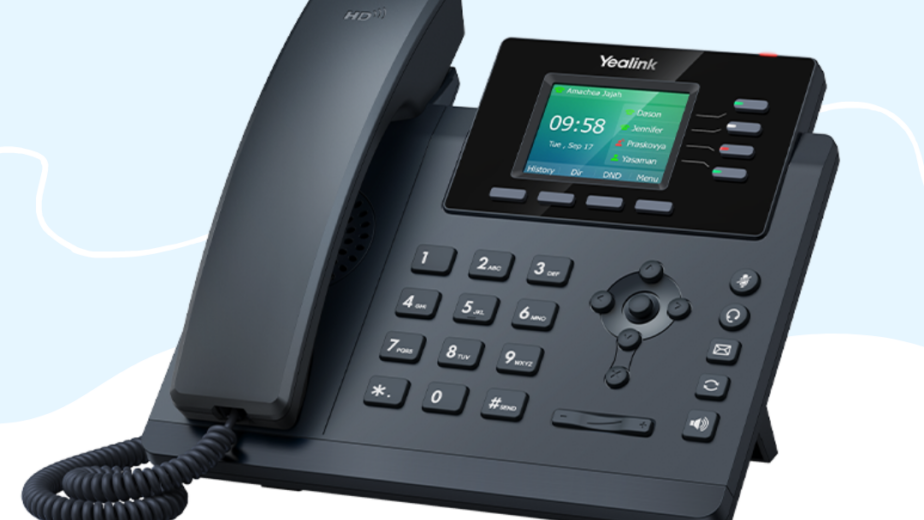
For many businesses, the phone system is still treated as a separate piece of technology. IT manages the computers and network, a telecom provider handles the phones, and another vendor may be responsible for cybersecurity.
That approach made more sense when business technology operated in separate silos. Today, those systems are increasingly connected, and managing them separately can create unnecessary complexity when something goes wrong.
A modern managed IT strategy takes a broader approach. Instead of viewing technology as a collection of independent systems, businesses can manage their networks, cloud applications, cybersecurity, computers, data, and communications as one connected environment.
Increasingly, that includes the VoIP systems Long Island businesses rely on every day.
Voice over Internet Protocol, or VoIP, turns business phone service into a technology platform that can connect voice, messaging, video conferencing, mobile communications, analytics, and business applications. Because those capabilities depend on the same networks, devices, cloud services, and security controls as the rest of the business, VoIP can play an important role in the overall IT strategy.
For Long Island businesses looking to improve reliability, scalability, security, and productivity, bringing communications and IT together can make a significant difference.
What Is VoIP and Why Does It Belong in a Managed IT Strategy?
VoIP allows businesses to make and receive calls over an internet connection rather than relying exclusively on traditional telephone infrastructure.
But modern VoIP is much more than simply replacing a desk phone. Today’s cloud-based systems can provide:
- Business calling
- Auto attendants
- Call routing
- Hunt groups
- Voicemail-to-email
- SMS messaging
- Team chat
- Video conferencing
- Desktop applications
- Call analytics and reporting
- CRM and other software integrations
DRP’s VoIP solutions, for example, are designed to connect employees across desk phones, computers, and mobile devices, while providing centralized management and collaboration features.
That makes a modern business phone system an important part of the overall IT environment.
When your phone system depends on your network, internet connectivity, cloud infrastructure, endpoints, security policies, and user accounts, it makes sense for those elements to be considered together.
That’s exactly where managed IT comes in.
VoIP Makes Your Network More Important
One of the biggest reasons VoIP belongs within a managed IT strategy is simple: your phone system depends on your network.
Traditional phone systems operate largely independently from your IT infrastructure.
VoIP doesn’t.
Voice traffic travels through your network and internet connection. If your network is poorly configured, overloaded, unstable, or inadequately monitored, your employees may experience:
- Dropped calls
- Choppy audio
- Delays
- Call quality issues
- Connectivity problems
- Difficulty using loud applications simultaneously
A managed IT provider can evaluate the network before implementing VoIP and continue monitoring its performance afterward.
This allows your IT strategy to account for network performance, bandwidth requirements, Wi-Fi coverage, connectivity, traffic management, and infrastructure reliability.
Instead of asking, “Why are our phones having problems?” your technology partner can look at the entire environment. That broader perspective is one of the major advantages of integrating communications with managed IT.
Proactive IT Support Can Help Prevent Communication Downtime
Businesses rarely think about their phone systems until they stop working. And when phones go down, the impact can be immediate.
Customers can’t reach your employees. Sales calls are missed. Employees can’t communicate efficiently. Customers service slows down. Important conversations may be delayed.
Managed IT is fundamentally designed around a proactive approach.
DRP’s managed IT services include infrastructure management, software and hardware maintenance, issue identification and resolution, 24/7 remote monitoring, cloud services, security, and remote workforce support. When communications are incorporated into that strategy, your phone system becomes part of the technology environment being considered and supported.
That can help your business move away from a reactive model, where something breaks and someone has to call for help, toward a more proactive approach in which systems are monitored, potential problems are identified, and issues can be addressed before they become major disruptions.
For businesses where communication is mission-critical, that difference matters.
VoIP and Cybersecurity Need to Work Together
Your phone system may not be the first thing you think about when discussing cybersecurity.
It should be.
Modern VoIP systems are cloud-connected platforms that can interact with users, devices, applications, and networks. That means security should be considered when designing, configuring, and managing the system.
A comprehensive managed IT strategy can look at communications alongside the rest of your security environment. That can include evaluating:
- User access
- Authentication
- Endpoint security
- Network security
- Account permissions
- Software updates
- Device configurations
- Remote access
- Data protection
- Business continuity
This is particularly important for businesses with remote or hybrid employees.
If employees can use their business phone numbers through mobile and desktop applications, the organization needs appropriate policies and protections surrounding those devices and accounts.
The goal is not simply to make VoIP work. It is to make business communications work securely within the broader technology environment.
VoIP Supports the Modern Hybrid Workforce
The traditional office phone was designed around a simple assumption: employees work at their desks.
Today’s workforce doesn’t necessarily operate that way. Employees may work from the office, from home, while traveling, or from multiple locations throughout the week. Modern VoIP systems are designed for this reality.
DRP’s VoIP solutions include mobile and desktop applications, along with features such as team chat, SMS messaging, video conferencing, and business calling.
That makes business communications another component of a broader remote-work strategy.
Your managed IT provider can help ensure employees have secure access to the technology they need while maintaining appropriate security and support standards. For Long Island businesses with employees distributed across offices, homes, and client locations, this flexibility can be especially valuable.
VoIP Can Make IT Management Simpler
Adding another technology platform might sound like it would make IT more complicated. The opposite can be true when communications are properly managed.
Cloud-based VoIP can reduce dependence on aging on-premises phone hardware and allow administrators to manage users and features through centralized systems.
For example, adding an employee to a modern phone system may be significantly simpler than configuring an entirely new traditional phone extension. The same applies when employees change departments, move offices, begin working remotely, or leave the company.
Instead of treating every phone change as a separate telecommunication project, communications can become part of your organization’s broader user-management process.
That is particularly useful for growing companies.
A managed IT partner can help coordinate technology changes throughout the employee lifecycle, from onboarding through offboarding.
VoIP Can Scale With Your Business
Growth can expose weaknesses in outdated technology.
Adding five employees shouldn’t require a major phone-system overhaul. Opening another location shouldn’t mean replacing your communications infrastructure. A modern VoIP platform can provide a more flexible foundation for expansion.
Businesses can add users, modify call routing, establish departments, create hunt groups, and adjust communications capabilities as their needs evolve.
This scalability is particularly important for Long Island businesses that may operate across Nassau, Suffolk, and the greater New York metropolitan area.
Your communications platform should support where the business is going, not lock you into the way business operated five years ago. And because managed IT also focuses on strategic technology planning, VoIP can be evaluated as part of your infrastructure rather than as an isolated purchase.
Integrating VoIP with Business Applications Can Improve Productivity
A phone call rarely exists in isolation.
When a customer calls, an employee may also need to access a CRM, customer record, scheduling application, email, or other business software. Modern VoIP systems can integrate with these business applications to create more conntected workflows.
DRP’s current VoIP offering highlights CRM and application integrations as part of its communications capabilities. That creates opportunities to make communications more efficient.
For example, instead of simply answering a call, an employee may be able to access relevant customer information, communicate with another team member, document the interaction, and follow up- all within a more connected technology workflow.
This is one reason VoIP should be viewed as more than a phone replacement. It can become part of the digital infrastructure that supports how your employees actually work.
VoIP Gives Businesses Better Visibility Into Communications
Traditional phone systems often provide limited insight into how communication is being used.
Modern platforms can provide reporting and analytics that help organizations understand calling patterns and performance. Depending on the platform, businesses may be able to evaluate metrics such as:
- Call volume
- Call activity
- Department performance
- Response patterns
- Call routing
- Employee availability
- Communication trends
That information can support better business decisions.
A company might discover that its busiest department needs additional coverage. A sales team might identify opportunities to improve response times. Customer service managers might uncover patterns that warrant additional training.
When those analytics are considered alongside other business technology data, organizations can make more informed decisions about both technology and operations.
What Does VoIP Look Like as Part of a Managed IT Strategy?
Think of your technology environment as a connected ecosystem. At the center is your business network. Around it are your:
- Computers and endpoints
- Cloud applications
- Cybersecurity
- Backup and disaster recovery
- Internet connectivity
- Business phone system
- Mobile and remote users
Each component affects the others. Your phone system depends on the network. Your network requires appropriate security. Remote employees need secure access, cloud applications depend on reliable connectivity, and the business ultimately depends on all of these systems working together.
That’s why an effective managed IT strategy shouldn’t simply ask whether the phone system works. It should ask: Does our communications technology support the way our entire business operates?
Why One Technology Partner Can Make a Difference
One of the biggest challenges businesses face when managing technology is vendor fragmentation.
You might have one company handling IT, another managing phones, another providing cybersecurity, and another responsible for hardware.
When everything works, that may not seem like a problem. When something breaks, it can become one.
Is the problem the phone system? The network? The internet connection? The firewall? A user device? The cloud platform?
When multiple vendors are involved, responsibility can become unclear.
DRP’s approach is built around bringing IT, cybersecurity, communications, print, and other office technology solutions together under one partner. The company describes this as having one point of contact and clear accountability rather than passing between providers.
For a business owner, that can mean less time coordinating vendors and more time focused on the business.
How to Know If Your VoIP Strategy Needs an Upgrade
Your business may benefit from taking a loser look at how its phone system fits into its IT environment if you’re experiencing any of the following issues.
Frequent Call-Quality Problems
Dropped calls, poor audio, delays, or inconsistent performance can indicate underlying network or infrastructure issues.
Difficulty Supporting Remote Employees
If employees can’t easily access business communications outside the office, your phone system may be limiting your workforce.
Complicated Employee Changes
If adding or removing users requires significant hardware changes or lengthy service calls, your system may not be keeping paace with the business.
Aging Phone Hardware
Outdated systems can become increasingly difficult and expensive to maintain.
Multiple Technology Vendors
If you’re constantly figuring out which company to call when something goes wrong, consolidating technology support may simplify your environment.
Limited Reporting
If you have little visibility into call activity or performance, you may be missing useful operational information.
Communication and IT Are Managed Separately
This may be the biggest sign of all. If your phone system isn’t considered when you’re planning your network, cybersecurity, cloud services, remote work, and business continuity, it may not be fully aligned with your technology strategy.
Choosing VoIP Systems on Long Island: Think Beyond the Phone
For Long Island businesses, choosing a VoIP system shouldn’t simply be a matter of comparing monthly phone rates.
The better question is: “How will this communications platform fit into our entire technology environment?”
Consider:
- How will it interact with your network?
- How will remote employees use it?
- What security controls are available?
- How easily can users be added or removed?
- Can it integrate with your business applications?
- What reporting capabilities are available?
- How will the system scale?
- Who will support it when something goes wrong?
- Can your IT provider manage the communications environment alongside your other technology?
These questions shift the conversation from simply buying a phone system to choosing communications technology that supports the broader IT strategy. That is an important distinction for businesses evaluating VoIP systems on Long Island.
VoIP Isn’t Just a Phone System- It’s Part of Your IT Infrastructure
The modern office doesn’t operate in silos.
Your employees don’t think of their computer, email, cloud applications, phone, and messaging platform as completely separate technologies. They simply expect all of them to work.
Your technology strategy should reflect that reality.
When VoIP is integrated into a managed IT strategy, businesses can take a more comprehensive approach to communications, connectivity, security, support, and growth. For organizations considering VoIP systems on Long Island, that means looing beyond the phone itself.
The right system should fit your network, support your employees, align with your cybersecurity strategy, and scale with your business. Just as important, the communications platform should have the support structure needed to keep the broader technology environment operating reliably.
That is the difference between simply replacing a phone system and building a more connected approach to business communications.
Ready to Make Your Business Communications Part of a Smarter IT Strategy?
DRP helps Long Island businesses bring their technology together, from managed IT and cybersecurity to cloud services and business communications. Our VoIP solutions are designed for modern teams with features including business calling, auto attendants, hunt groups, mobile and desktop apps, messaging, video conferencing, and more.
If your phone system feels disconnected from the rest of your technology, or you’re dealing with an aging system that no longer fits the way your business operates, it may be time for a broader technology assessment.
Explore DRP’s Managed IT and VoIP Phone Systems to see how a more connected technology strategy can support your Long Island business.
FAQs
Often, yes, but the network should be evaluated before a VoIP system is deployed. A business may already have sufficient internet capacity and networking infrastructure, while others may need adjustments to the bandwidth, Wi-Fi coverage, switching, traffic prioritization, or other components.
A network assessment can help determine whether existing infrastructure can reliably support voice traffic alongside cloud applications, file transfers, video meetings, and other everyday business activity. This is one advantage of considering VoIP as part of the broader IT environment rather than evaluating the phone system by itself.
The impact depends on how the VoIP system and business continuity plan are configured. Because cloud-based VoIP relies on connectivity, businesses should plan for internet or network disruptions before they occur.
Options may include redundant connectivity, mobile applications, call forwarding, alternate locations, or other continuity measures. A managed IT strategy can account for communications alongside internet redundancy, backups, disaster recovery, and other systems required to keep the business operational.
Yes, involving the IT provider early can help prevent compatibility, network, security, and support problems later. A VoIP platform interacts with infrastructure that the IT provider may already manage, including networks, internet connections, user devices, security controls, cloud applications, and remote-access policies.
Bringing IT into the decision can help the business evaluate the phone system as part of the complete technology environment rather than discovering limitations after implementation.
In many cases, existing business phone numbers can be transferred to a new VoIP provider. The process is generally known as number porting, although eligibility, timing, and requirements can vary depending on the existing carrier and service.
Businesses planning a transition should review their current numbers, extensions, toll-free numbers, fax requirements, call routing, and other communications needs before migration so the change can be planned with minimal disruption.
Using one provider can simplify support when the phone system and IT infrastructure are closely connected. It reduces the need to determine whether a communication problem originates with the network, internet service, device, security configuration, or VoIP platform before deciding which vendor to contact.
That does not mean every business must use a single provider. The important consideration is whether responsibility, escalation procedures, and support are clearly coordinated across the systems on which business communications depend.