In today’s business environment, customer communication happens fast- and expectations are even faster. Whether your team is answering inbound calls, making sales outreach, handling support requests, or collaborating internally, your phone system can no longer function as a disconnected utility.
Modern businesses need their communications tool to work as intelligently as the rest of their technology stack.
That’s why your phone system should work like your CRM.
A Customer Relationship Management (CRM) platform is designed to centralize your customer information, streamline interactions, and empower teams with data. Your business phone system should do the same thing- while integrating seamlessly into the way your team communicates every day.
If your current phone system still behaves like a standalone dial tone provider, you’re missing opportunities to improve productivity, customer experience, accountability, and revenue.
At DRP Solutions, we help businesses modernize communications with advanced VoIP phone systems designed to function as a part of unified business ecosystem- not separate from it.
Here’s why your phone system should operate with the same intelligence, accessibility, and strategic value as your CRM.
What Does It Mean for a Phone System to “Work Like Your CRM”?
Traditional business phone systems were built for one thing: making and receiving calls.
Modern VoIP and unified communications platforms are built for much more.
Today’s cloud-based business phone systems combine calling, texting, video conferencing, team messaging, analytics, mobile apps, presence visibility, and CRM integration into one centralized communications hub. Instead of being a standalone tool, your phone system becomes an intelligent business platform.
When your phone system works like a CRM, it should:
- Track and log interactions automatically
- Provide context before, during, and after conversations
- Centralize communication history
- Support collaboration across departments
- Enable reporting and analytics
- Be accessible from anywhere
- Integrate with the tools your team already uses
- Improve customer experience through smarter workflows
In short, your phone system should help manage relationships- not just facilitate calls.
Why Legacy Phone Systems Are Holding Businesses Back
Many organizations still rely on outdated PBX systems or basic hosted phone setups that provide little more than voice service.
The problem?
These systems create communication silos.
Without intelligent integrations and modern collaboration tools, businesses struggle with:
- Lost customer information
- Missed follow-ups
- Poor call routing
- Inconsistent customer experiences
- Lack of accountability
- No visibility into call performance
- Difficulty supporting remote hybrid teams
- Manual notetaking and data entry
A disconnected phone system slows down your team and frustrates your customers. Your CRM evolved because businesses needed more than spreadsheets to manage relationships. Your phone system needs to evolve for the same reason.
Customer Context Should Be Instant
Imagine this:
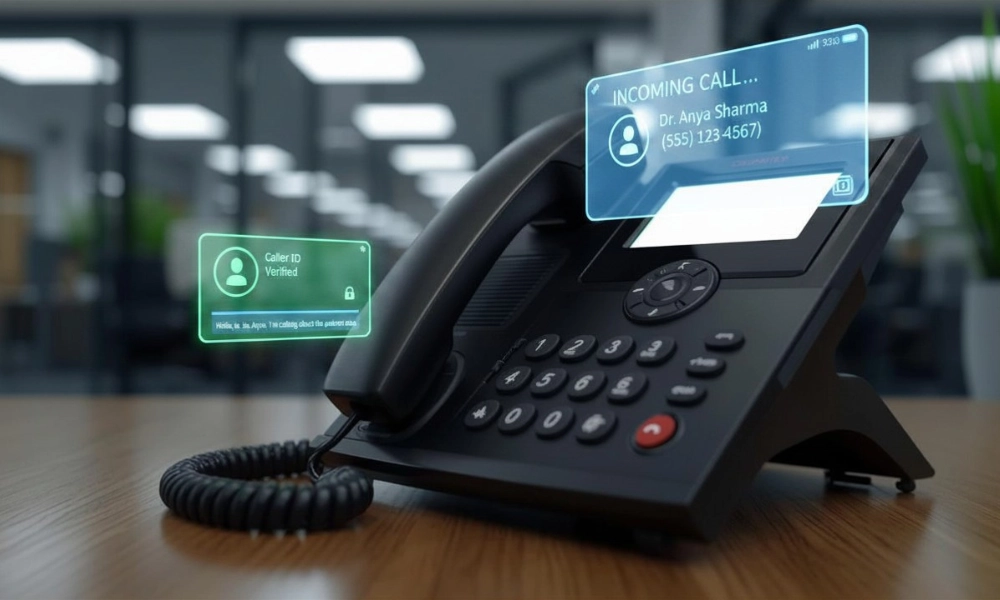
A customer calls your business. Instead of answering blind, your employee immediately sees:
- Caller name
- Company information
- Previous interactions
- Account notes
- Purchase/service history
- Assigned account representative
- Open tickets or pending issues
That’s the CRM-like experience modern businesses need from their phone system.
When your communication platform integrates with customer data and internal workflows, every call becomes more informed and more productive.
Why This Matters
Customers hate repeating themselves.
They expect your business to know who they are, why they’re calling, what happened last time, and who they spoke to. Businesses that fail to provide this continuity create friction and frustration.
A modern VoIP platform with CRM-like intelligence helps your team deliver faster, more personalized service.
Every Interaction Should Be Logged Automatically
Your CRM tracks emails, meetings, notes, and tasks. Why should calls be any different?
A modern phone system should automatically document:
- Incoming/outgoing calls
- Missed calls
- Voicemails
- Call recordings
- SMS/text conversations
- Call durations
- Notes/transcripts
- Follow-up tasks
This eliminates manual data entry and ensures no interaction disappears into the void.
The Benefit
Automatic logging creates better accountability, more complete customer records, improved sales pipeline visibility, stronger support documentation, and easier compliance and auditing. When your phone system captures interaction data automatically, your business gains intelligence instead of losing it.
Your Team Should Be Reachable Anywhere
CRMs moved to the cloud because work is no longer tied to a desk. Your phone system should reflect the same reality.
Modern VoIP systems enable employees to:
- Take business calls from laptops
- Use mobile apps on smartphones
- Send/receive business texts anywhere
- Join video meetings remotely
- Access voicemail from any device
- Transfer calls between desktop and mobile seamlessly
DRP Solutions’ VoIP offerings include desktop and mobile accessibility, so your workforce stays connected wherever work happens.
Why This Matters for Modern Businesses
Remote and hybrid work are permanent realities. A rigid office-only phone system creates missed calls, delayed responses, poor remote employee experience, and fragmented communication. A CRM works anywhere. Your phone system should too.
Internal Collaboration Should Be Built In
Your CRM likely helps departments collaborate through notes, tasks, and shared records.
Your phone system should support collaboration the same way.
Modern business communication platforms now include team chat, presence indicators, internal messaging, video conferencing, screen sharing, call transfer/whisper/barge features, shared call queues, and department hunt groups.
Unified communications platforms combine these tools into a single experience, improving internal responsiveness and reducing communication silos.
Example
A customer calls sales with a technical question.
Instead of saying: “Let me email engineering and get back to you.”
Your rep can:
- See who is available
- Message engineering instantly
- Pull them into the call
- Resolve the issue live
That’s the difference between a phone system and a communications platform.
Your Phone System Should Improve Customer Routing
CRM workflows automate lead routing, task assignment, and customer journeys. Your phone system should do the same for inbound calls.
With intelligent VoIP routing features, businesses can use:
- Auto attendants
- Time-based routing
- Skills-based routing
- Department call queues
- Hunt groups
- Overflowing routing
- Geographic routing
- Failover routing
DRP Solutions offers features like auto attendants and hunt groups to ensure customers reach the right person quickly.
Why It Matters
Customers do not want to wait on hold, get transferred repeatedly, explain their issue multiple times, or get in touch with the wrong department.
Better routing means faster resolutions, more closed sales, less employee frustrations, and happier customers.
Analytics Should Drive Better Decisions
Your CRM gives you dashboard and reporting. Your phone system should too.
Modern VoIP analytics provide important insights into call volume, missed call rates, average answer time, call abandonment, peak call periods, employee responsiveness, department performance, call recordings/transcripts, and even customer sentiment trends.
Advanced platforms now even include AI-powered call summaries, transcriptions, and sentiment analysis.
Why This is Powerful
Without analytics, you’re guessing.
With analytics, you can act smarter, improve training, identify bottlenecks, optimize customer experience, hold teams accountable, and spot revenue opportunities.
If your CRM gives you data on sales activity, your phone system should give you data on communication performance.
Business Texting Should Be Standard
Customers increasingly prefer text messaging over phone calls. A CRM captures multi-channel communication. Your phone system should too.
Modern VoIP platorms include:
- Business SMS
- Text-enabled main business number
- Internal SMS logging
- Shared team inboxes
- Mobile texting from business numbers
Business texting is now a core expectation, not an optional feature. Texting is used in many businesses for things like appointment reminders, sales follow-ups, customer support, project updates, payment reminders, and scheduling.
If your team uses personal phones for texting customers, your communication strategy is broken.
Scalability Should Be Effortless
CRMs scale with your business. Your phone system should too.
Cloud VoIP platforms allow businesses to:
- Add users instantly
- Open new locations easily
- Support remote workers seamlessly
- Deploy new phone numbers quickly
- Scale seasonally
- Eliminate expensive hardware upgrades
Traditional PBX systems often require hardware purchases, cabling changes, IT intervention, capacity planning, and physical installation. VoIP removes those barriers.
Security and Reliability Matter More Than Ever
Business communications are critical infrastructure.
Modern cloud VoIP platforms offer enterprise-grade security and uptime protections that legacy phone systems often cannot match. Features include encryption, secure cloud hosting, and high-availability service commitments with fast response times.
Why Businesses Care
Downtime means missed revenue, poor customer experience, damaged reputations, and lost productivity. A CRM platform is expected to be secure and reliable- your communications platform should meet the same standard.
Communication Should Be Part of Business Strategy- Not an Afterthought
The most successful businesses treat communication as a strategic function- not just a utility bill.
When your phone system works like your CRM, it becomes:
- A productivity platform
- A customer experience engine
- A sales enablement tool
- A collaboration hub
- A data source for deecision making
Communication impacts every department: sales, customer service, operations, leadership, field teams, and remote workers. Your phone system should support strategic growth- not merely “make calls.”
Why Businesses Choose DRP Solutions for Modern VoIP Phone Systems
At DRP Solutions, we help organizations transform outdated communications into modern, cloud-based VoIP and unified communication systems built for today’s business environment.
Our VoIP solutions deliver:
- Advanced business phone features: auto-attendants, hunt groups, call forwarding, voicemail-to-email, presence visibility, and call queues
- Collaboration tools: team chat, video conferencing, SMS/texting, and screen sharing
- Anywhere accessibility: desktop app, mobile app, softphone support, and remote workforce enablement
- Enterprise reliability: cloud-hosted architecture, secure communications, and business continuity support
- Scalable growth: easy user expansion, multi-location deployment, and flexible licensing
DRP Solutions partners with leading communications technology providers like Intermedia to deliver robust unified communications experiences tailored to modern businesses.
Signs Your Phone System Isn’t Working Like Your CRM
If any of these sound familiar, it may be time to upgrade:
- Your employees manually log call notes
- Customers repeat themselves every time they call
- Calls go unanswered or they get lost
- You can’t track phone performance
- Your team struggles with communication
- You use multiple disconnected tools for calls, texting, chat, and meetings
- Your business numbers aren’t mobile friendly
- Adding users requires hardware or IT headaches
- You have no insight into missed opportunities
If your phone system is behind your CRM in capability, it’s behind your business.
Final Thoughts: Your Phone System Should Be a Business Platform
The days of treating your phone system as a standalone office necessity are over.
Modern businesses need communication technology that:
- Centralizes interactions
- Improves customer experience
- Increases employee productivity
- Supports hybrid work
- Delivers analytics
- Integrates with business workflows
- Scales with growth
Your CRM already does this for customer data. Your phone system should do it for communication. When your phone system works like your CRM, every conversation becomes smarter, faster, and more valuable.
Ready to Optimize Your Business Communications?
At DRP Solutions, we help businesses replace outdated phone systems with intelligent VoIP solutions designed for how modern teams work.
Whether you need better mobility, smarter call routing, unified communications, or a complete communications overhaul, our experts can help.
Contact us today for a FREE phone system assessment and discover how a modern VoIP platform can transform the way your business communicates.