
Access Control
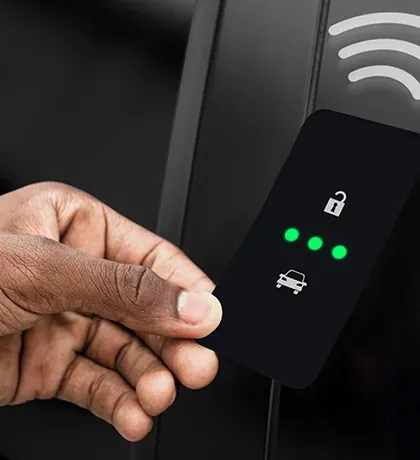
Control Who Enters Your Business. Protect What Matters Most.
Physical security starts with knowing exactly who can access your building, when they enter, and where they go. DRP Solutions delivers advanced access control systems that allow businesses to centrally manage doors, elevators, and secured areas across one facility or multiple locations. With browser-based management software, administrators gain real-time visibility, detailed reporting, and simple control from any device.
Access Control Capabilities

Innovative Controller Architecture
Single-board over-door controller includes motion sensor request-to-exit, communication ports, battery backup, removable terminals, and visual status indicators.

Smart Web-Based Software
Browser-based management software delivers intuitive controls, summary dashboards, task shortcuts, and responsive HTML5 interface across devices and browsers.

Seamless System Integration
Integrates easily with existing building security systems including fire control, intrusion detection, surveillance cameras, and elevator management platforms.

Facial Recognition
Biometric access control uses facial recognition to verify identity in real time, providing secure, touchless entry while reducing reliance on keycards or PINs.

Advanced Mapping Interface
Interactive facility maps display device locations, allowing administrators to instantly access related system data, door activity, and video.

User Time Tracking Reports
Generate detailed reports showing how long individuals remain inside defined areas, supporting compliance, auditing, security monitoring, and workforce tracking.

Action Control Engine
Automate security responses by linking events and actions across devices, enabling powerful workflows and scalable system control.

Video Verification Integration
Automatically connect access events with security video clips, allowing administrators to immediately review footage associated with entry activity.

Unmanaged Door Monitoring
Monitor doors outside the access system by adding them as unmanaged devices, improving awareness across facilities.

Powerful Reporting Templates
Generate detailed reports for users, doors, inputs, outputs, and activity while saving templates for fast future reporting.
Common Questions
The best access control system depends on the size of the facility, number of entry points, security requirements, number of users, and whether the business needs to manage one location or multiple sites.
A business with a few secured doors may need a relatively straightforward credential-based system, while organizations with multiple buildings or higher security requirements may benefit from centralized web-based management, detailed activity reporting, video integration, biometric verification, and automated security responses. DRP Solutions can evaluate the facility, existing security infrastructure, access requirements, and future growth plans to recommend a system that provides the appropriate level of control without making day-to-day administration unnecessarily complicated. DRP's access control platform is designed to manage doors, elevators, and secured areas from a centralized browser-based interface.
Yes. In many cases, a modern access control system can be installed in an existing commercial building and integrated with security systems that are already in place.
The exact requirements depend on the doors, locks, wiring, network infrastructure, existing security equipment, and areas that need to be controlled. An assessment can determine which existing components can remain and where new controllers, readers, credentials, or other equipment are needed. This is especially important for businesses that want to improve security without replacing every existing system. DRP's access control solution can integrate with systems including surveillance cameras, intrusion detection, fire control, and elevator management.
Yes. Access control systems can be configured so different people have permission to enter specific doors or secured areas based on their role, location, schedule, or security requirements.
For example, general employees might have access to office entrances during normal business hours while managers, IT staff, or facilities personnel receive access to restricted rooms or after-hours entry. This provides much greater control than traditional keys because access privileges can be managed centrally and changed as responsibilities change. Detailed activity records can also help administrators review when users entered particular areas and how long they remained within defined locations. DRP's system includes user activity and time-tracking reporting for this purpose.
Access can typically be revoked through the management system without having to replace locks or redistribute physical keys throughout the building.
This is one of the major operational advantages of electronic access control. When an employee leaves, changes roles, loses a credential, or should no longer enter a particular area, administrators can modify that person's permissions centrally. Businesses can therefore respond much faster than they could with a traditional key-based system. The activity reporting available through DRP's access control platform also gives administrators a record of door and user activity that can assist with security reviews and auditing.
A system may need to be upgraded if it is difficult to manage, cannot support new doors or locations, provides limited reporting, relies heavily on physical keys, or does not integrate well with other security technologies.
Businesses should also consider an upgrade when their security needs have changed because of growth, additional locations, employee turnover, compliance requirements, or increased concern about controlling sensitive areas. An access control assessment can review the existing system, identify vulnerabilities and administrative limitations, and determine whether existing components can be retained or integrated into a more capable solution.